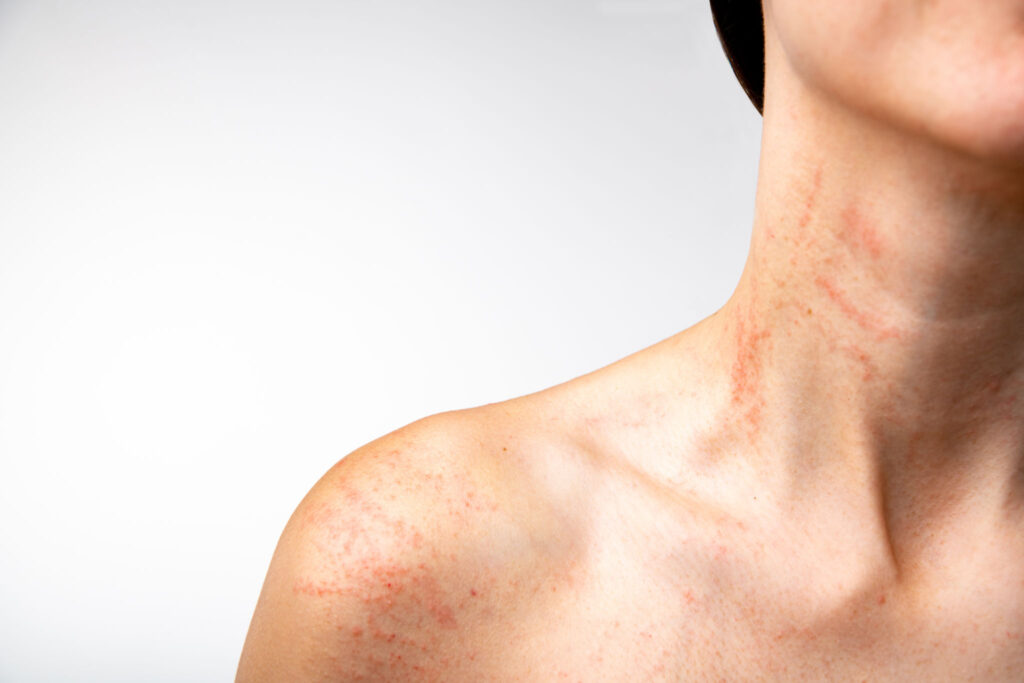
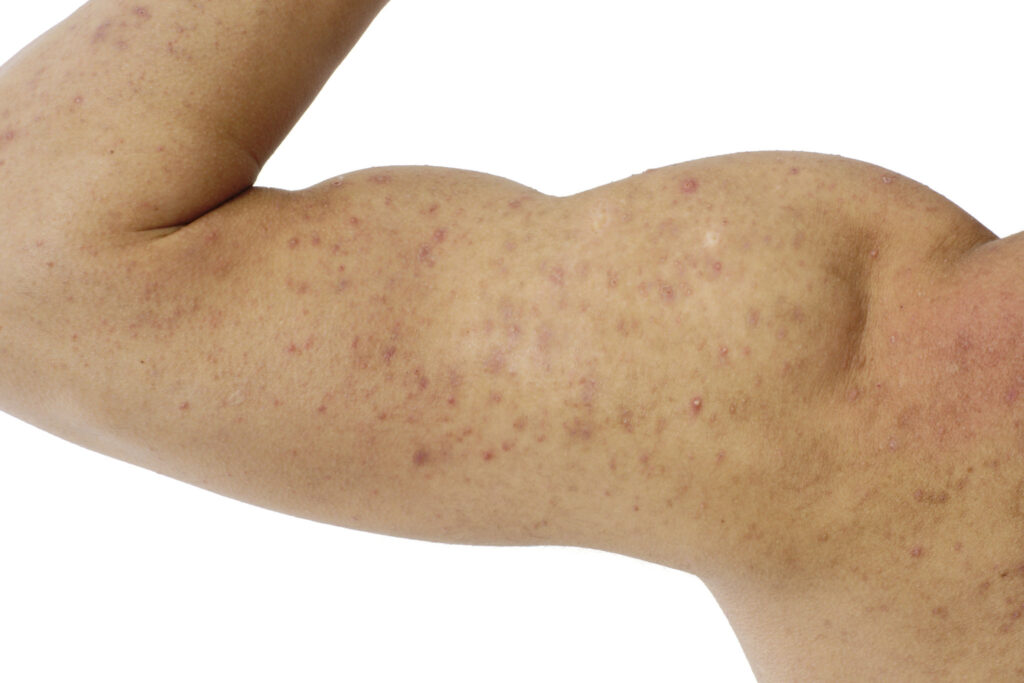
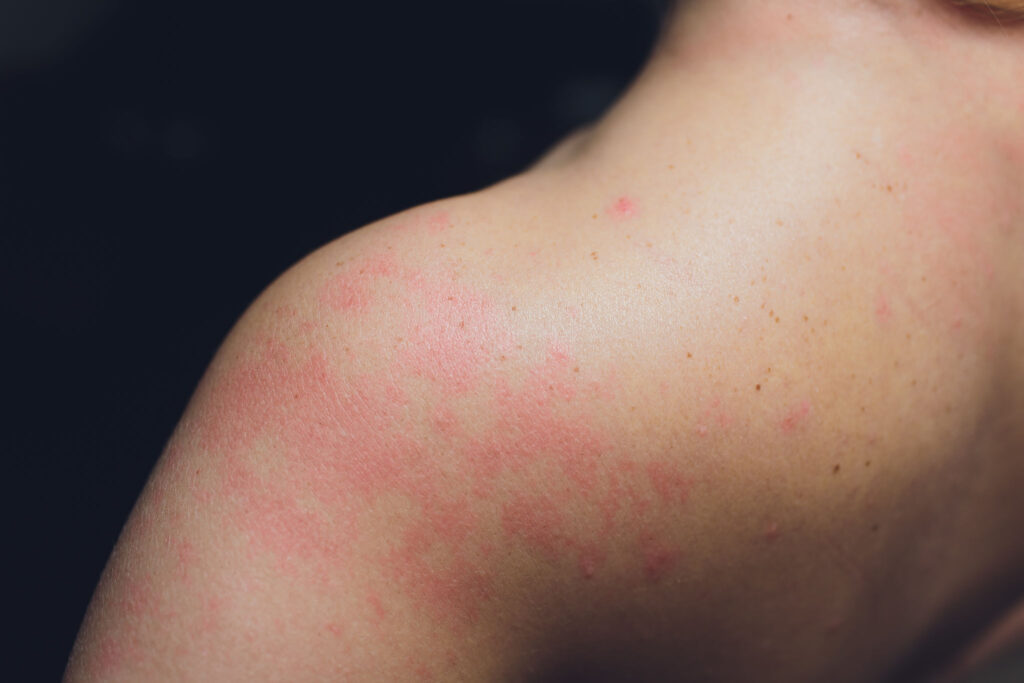
Urticaria commonly referred to as hives, is a kind of skin rash notable for pale red, raised, itchy bumps. Hives typically last less than 4 hours but an individual lesion may last for up to 24 hours and the whole process may stay for days or weeks.
Food allergies such as allergies to nuts, strawberries, citrus fruit, egg, food additives, spices, chocolate, or shellfish. Sometimes you can develop an allergy to a food even if you have eaten it without any problem many times before.
Allergies to insect bites and stings.
Allergies to medicines such as penicillin, aspirin, anti-inflammatory painkillers, etc.
A viral infectionsuch as a cold or flu can trigger an urticarial rash in some people. (You react to the virus.) A mild viral infection which causes few other symptoms is probably a common trigger of an urticarial rash that develops without an apparent cause.
Skin contactwith sensitisers causes a local area of urticaria in some people. For example, chemicals, latex, cosmetics, plants, ointments, nettle stings, etc.
Physical urticaria. This is a type of urticaria in which a rash appears when the skin is physically stimulated. The most common is called dermatographism (dermatographia) when a rash develops over areas of skin which are firmly stroked. Sometimes an urticarial rash is caused by heat, cold, emotion, exercise, or strong sunlight.
Treatment
A cool bath or shower may ease the itch.
Calamine lotion or menthol 1% in aqueous cream can help with itching.
Antihistamine tablets can ease symptoms.
If you can identify a trigger such as a food, then it would be sensible to avoid it in the future.
A short course of steroid tablets is sometimes prescribed in severe cases to help reduce swelling in the skin.
If extra control is needed you may be prescribed an antileukotriene medicine. These medicines also help to block the action of histamine and are intended to be taken with antihistamines.